Why Does Knee Pain Increase After 50? Causes & Treatments
Introduction
Many people notice changes in their knee health after the age of 50. Activities that once felt easy, such as climbing stairs, walking for long distances, or getting up from a chair, may become uncomfortable due to knee pain and stiffness. While aging is one factor, conditions like arthritis, cartilage damage, previous injuries, and muscle weakness can also contribute to worsening knee problems. Understanding the cause of knee pain early can help you choose the right treatment and maintain your mobility. If you are experiencing persistent discomfort, consulting an experienced orthopedic surgeon Navi Mumbai can help identify the problem and prevent further joint damage.
Why Does Knee Pain Increase After 50?
Knee pain after 50 is often linked to gradual changes inside the knee joint. The knee works as a weight-bearing joint and experiences pressure during almost every activity, including walking, standing, and bending. Over time, the protective cartilage between the knee bones may start wearing down. When cartilage becomes thinner, the joint may lose its smooth movement, leading to pain, stiffness, and swelling.
Age-related muscle changes also affect knee support. The thigh and hip muscles help stabilize the knee. When these muscles become weaker due to reduced activity, more pressure is transferred to the knee joint. Lifestyle factors can also influence knee health. Increased body weight, lack of exercise, previous injuries, and incorrect movement patterns may speed up joint wear and discomfort.
Common Causes of Knee Pain After 50
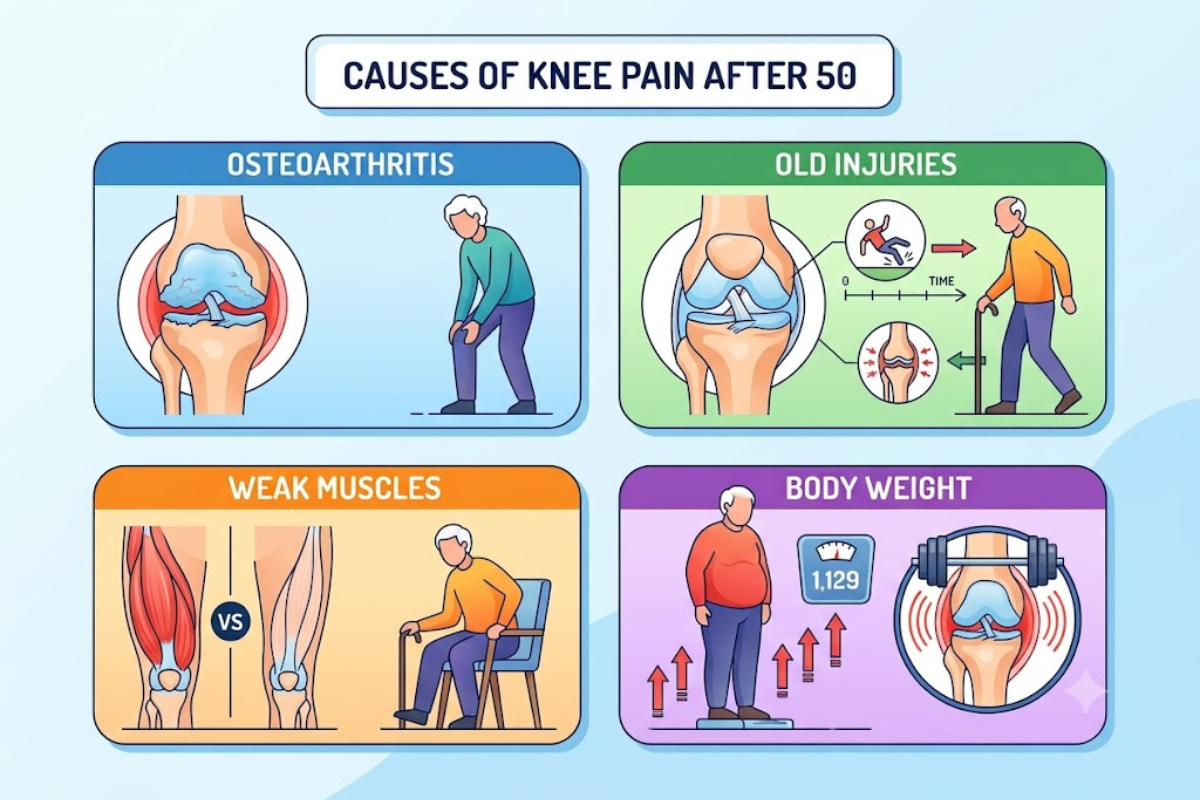
1. Osteoarthritis of the Knee
Osteoarthritis is one of the most common reasons for knee pain in people above 50. It occurs when the cartilage that protects the knee joint gradually breaks down.
Common symptoms of knee osteoarthritis include:
- Pain while walking or climbing stairs
- Stiffness after waking up or sitting for a long time
- Swelling around the knee
- Difficulty bending or straightening the leg
- Reduced walking distance
- Grinding or clicking sensation during movement
Many patients ignore these symptoms thinking they are a normal part of aging. Early diagnosis can help slow progression and improve comfort through appropriate treatment.
2. Previous Knee Injuries
An old knee injury can affect joint health even years after recovery. Ligament injuries, meniscus tears, fractures, or sports-related injuries may change the way the knee moves.
When the joint does not function properly, uneven pressure can develop inside the knee, increasing the risk of cartilage damage over time.
3. Weak Muscles Around the Knee
Strong muscles support knee movement and reduce stress on the joint. After 50, reduced physical activity may lead to weaker thigh muscles.
Simple strengthening exercises under professional guidance can improve stability and support better knee function.
4. Increased Body Weight
Your knees carry your body weight during daily activities. Extra weight increases pressure on the knee joint and may worsen existing arthritis symptoms.
Maintaining a healthy weight through balanced nutrition and regular activity can reduce unnecessary stress on the knees.
How Do You Know If Your Knee Pain Needs Medical Attention?
Not every knee pain requires surgery, but certain symptoms should not be ignored.
A specialist can evaluate your symptoms, physical movement, X-rays, and other reports to understand the condition of your knee joint.
Knee Arthritis Stages and Available Treatment Options
The treatment approach depends on the severity of joint damage.
1. Early Knee Arthritis
During the early stage, patients may experience mild pain and occasional stiffness.
Treatment may include:
- Physiotherapy
- Muscle strengthening exercises
- Weight management
- Activity modification
The goal is to improve knee strength and reduce stress on the joint.
2. Moderate Knee Arthritis
At this stage, pain may occur more frequently and affect daily activities.
Doctors may recommend:
- Structured physiotherapy
- Medications
- Lifestyle changes
- Joint-preserving treatments based on individual needs
Regular monitoring helps prevent further deterioration.
3. Advanced Knee Arthritis
In severe arthritis, cartilage loss can cause continuous pain and difficulty walking. Patients may experience pain even during rest. When non-surgical treatments no longer provide relief, joint replacement surgery Navi Mumbai may be considered to restore mobility and improve quality of life.
When Is Knee Replacement Surgery Recommended?
Many patients worry that knee pain after 50 automatically means surgery. This is not true. Knee replacement is generally considered when:
- Severe arthritis affects daily activities
- Pain continues despite other treatments
- Walking becomes difficult
- Knee deformity develops
- Quality of life is affected
A detailed consultation helps determine whether surgery is required or whether other treatments can provide relief. Robotic knee replacement surgery in Kharghar Navi Mumbai allows specialists to use advanced planning methods while focusing on patient-specific requirements.
Recovery After Knee Replacement Surgery
Recovery plays an important role in achieving good results after knee replacement.
1. Initial Recovery
Patients are encouraged to begin movement and walking with support soon after surgery based on their condition.
2. Rehabilitation Phase
Physiotherapy helps improve:
- Knee bending
- Muscle strength
- Balance
- Walking ability
3. Long-Term Recovery
Most patients gradually return to routine activities with regular exercises and follow-up care.
Following rehabilitation instructions is important for achieving better mobility after surgery. Consulting an experienced joint replacement surgeon in Navi Mumbai can help patients understand the procedure, expected recovery, and long-term care plan.
Frequently Asked Questions
Take the Next Step Towards Pain-Free Movement
Knee pain after 50 is common but should not be ignored when it affects your daily life. Conditions like osteoarthritis, previous injuries, muscle weakness, and lifestyle factors can contribute to worsening symptoms. Early consultation, proper diagnosis, and timely treatment can help protect your mobility. Whether you need conservative care or advanced procedures like robotic knee replacement, guidance from an experienced specialist like Dr. Pramod Bhor can help you make an informed decision and move towards healthier, pain-free knees.